Drug Rehab Programs
Drug rehab programs vary widely. Most treatment programs are
either medically-based, spiritually, socially or holistic in approach.
Residential, inpatient, outpatient, and detox options are offered
at most centers overseeing treatment. Research clearly states
that the best results from drug rehab methods come from those
who have been in a program 3-months or better.
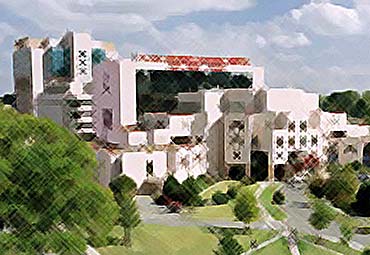 Drug rehab center
 |
|

Drug rehab treatment many times co-exist with centers that also
offer alcohol programs as well. This is because many who check
in with dependency problems have dual-diagnoses of alcohol and
substance abuse and need treatment for both. Though there are
many similarities between drug and alcohol rehab programs, there
are also some distinct differences as well. Withdrawal methods
for alcohol are the same whether the beverage of choice is beer,
wine or hard liquor. Withdrawal methods from drug dependency varies
as to the specific type of drug addiction.
For instance, some drug programs such as Narconon, "…
does not use drugs or medications to solve the problems caused
by drugs, but does use nutrition and nutritional supplements as
an important component of its delivery. Thus the program is neither
a psychiatric nor medical, but a social education model of rehabilitation."
Other treatments will use drugs and even anesthesia to rapid detox
from drugs such as codeine, heroin, morphine and opium addictions.
The programs
using anesthesia do so under supervision of a board-certified
anesthesiologist in a medical facility and essential lets the
chemically dependent person sleep through the painful withdrawal
symptoms of these specific drugs.
Medically-Based Drug Rehab Programs
Medically-based drug addiction programs are conducted at a medical
facilities set up specifically for those with substance abuse
problems such as licensed hospitals. Physicians and nurses are
available for constant monitoring to ensure safe withdrawal and
oversee the recovery process.
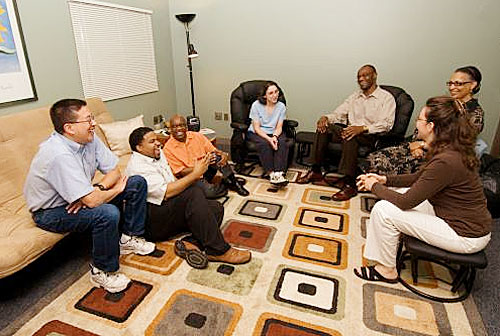
Traditional Group Counseling
Spiritual Treatment
Spiritual addiction treatment includes the 12-step programs that
give their will to a 'higher power' or Christian programs that
use both the 12-step methods and the Bible( plus the support of
like-minded individuals) to accomplish their rehab goals. Many
other specific spiritually-based drug programs also exist within
the traditional religious framework or alternative frameworks
such as metaphysics.
Social Programs
Social addiction rehab programs such as Narconon do not have
'patients' in the program, preferring the term 'students'. Students
do not recover from illnesses but rather learn something they
don't already know and graduate the program whenever enough life
skills are acquired to obtain a new drug-free life. According
to Narconon, "If graduates do run into serious difficulties,
they return to their Narconon center where they inevitably find
a specific part of the program that they earlier failed to fully
understand and therefore could not apply in the travails of daily
life."
Holistic Treatment
Holistic treatment usually focus on a mind, body and spirit approach
to chemical dependency. These programs may rely on traditional
drug dependency healing methods along with non-traditional methodology
in order to achieve the desired results. Some alternative holistic
methods which may be used in recovery include use of nutritional
eating and dietary and nutritional supplements, meditation, yoga,
visualization, biofeedback, exercise and relaxation tapes to name
a few.

Holistic Drug Rehab Program
Most inpatient drug treatment programs occur inside a licensed
and accredited hospital setting under the care of physicians
and nurses. While most inpatient care is long-term (3-months
or more), shorter term care can also be provided.
Residential drug treatment programs do not have the same rigid
requirements for care that inpatient facilities do, but they do
offer many a break from the sterility of the hospital setting.
Many residential programs are offered in a getaway setting as
a camp, ranch or other natural and peaceful environment.
Outpatient programs are
usually for those who do not have a long history of drug dependency
and are able to work out their issues while still attending school
or work. Support group meetings also offer additional support
to those in outpatient programs to help keep the individual stabilized
and functioning in a real world setting.
While most drug rehab centers do not offer a detox program solely,
most centers do offer detox options as the first step to one of
their other treatments. The body must first undergo a physical
withdrawal from the dependent substance before any ongoing treatment
can proceed. Since severe withdrawal can be life-threatening (heart
attacks, stroke, seizures, etc.) it is important that the drug
rehab center of choice is set up for 'worse case scenario' withdrawal.
Conclusion
No matter what the drug dependency problem is, though, the most
important step is to just get started. Pick a drug abuse treatment
program that you would like to be associated with for the next
3 or so months, that fits your budget, insurance, lifestyle and
get started. The time is now to say 'Yes' to the rest of your
life or that of a loved one. Information on alcohol
treatment programs may also be useful.
|
